labthinks_ ideas for a better world.
Developing better with Modern Methods of Construction (MMC)

At the lab_ collective, we have complete control over the design and build of our development projects. It means we can deliver our projects with design integrity and develop responsibly; free to explore Modern Methods of Construction (MMC) – off-site manufacturing and on-site techniques that provide alternatives to traditional house building. 

In this exploration, we dive into the importance of MMC and question why it’s not being used more widely in the construction industry. 

Modular and prefabrication have long been an accepted method for building construction in Japan and Scandinavia – in the latter, approximately 45% of all new homes built utilise MMC. But here in the UK MMC accounts, by best estimates, for around only *10% of all new homes. 

In Japan, the growth of prefabrication occurred after the Second World War – as both Japan and Britain suffered from a severe housing shortage and needed to industrialise their home building efforts to create housing quickly and efficiently.

In Britain, we ceased to continue with the kind of house building industrialisation that Japan set in motion. And, here, ‘prefabs’ quickly gained a bad rep for being poorly built.

But that was then. Nowadays, the methods and materials used are very different, albeit the housing shortage problem remains a similar driver.

Today, design technology has become a fundamental tool in the MMC process. Revit (Building Information Modelling software); is applied by our architects spacelab_ throughout the building’s lifecycle – from conceptual design to construction, its integral to every step of the process.

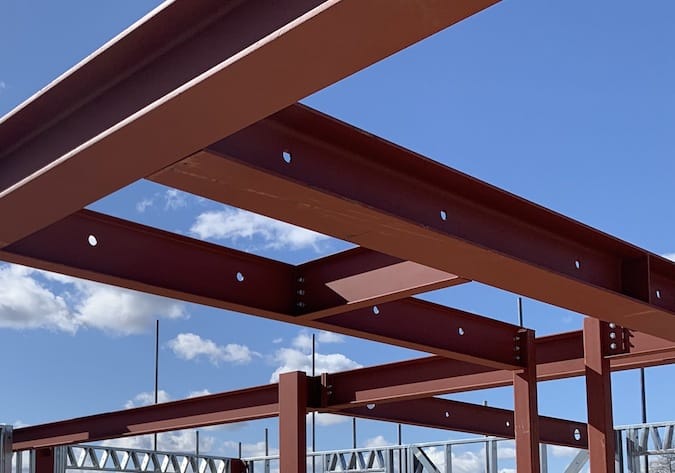
Steel modular construction system at Stratford Park

Such technology has digitised how we design and build, providing a solution that everyone understands, can easily follow and reference.

Yet, despite the technology being readily available MMC pick up by developers is still relatively low, although predicted to rise. And, as radical change continues at pace in other sectors like automotive and energy, by stark contrast, the construction industry sector continues to modernise at a slow pace. Developers’ opting to stick with more familiar traditional construction methods. Incredibly the majority of building construction around the world still use methods that are over 100 years old.

Government legislation may be needed to make more widespread change happen – as was the case in Scandinavia – but we believe developers have a responsibility to do more directly.

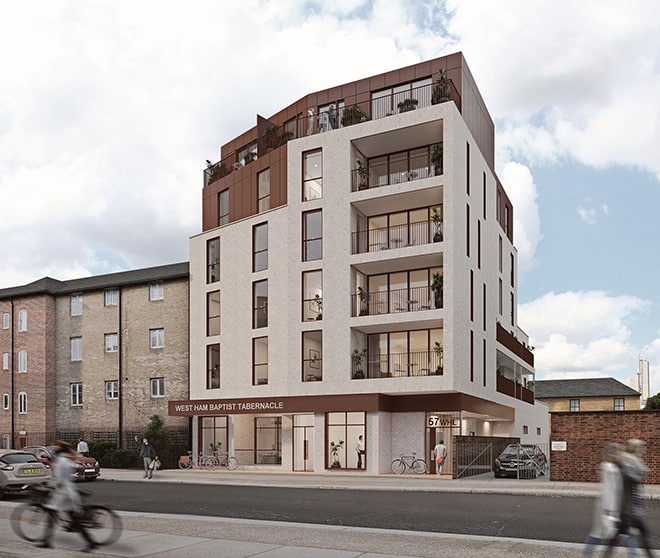
At urbanlab_ we’re learning to embrace MMC and are now implementing it with our projects. Take our latest development Stratford Park – the scheme comprises a church and communal space on ground and basement levels with 17 residential apartments above. The core building structure is being built using a steel modular construction system. Designed and engineered off-site, it’s then assembled on-site much like giant pieces of a Meccano set. The system has many benefits over traditional construction methods, to share a few:

Sustainability – the materials are 100% recyclable, there is zero site wastage, and the need for site deliveries is vastly reduced.

Time – modular construction speeds up build times, in this case by around 30% over traditional build methods. And this reduces the level of disruption for the local community and helps us deliver the building for its new occupiers sooner. So everyone wins.  
Quality and performance – a key aspect of the steel structure is its stability, which reduces the amount of shrinkage and movement that occurs post build as the building settles. And being steel, it’s not prone to rot or degradation. 

Stratford Park is a development that utilises MMC alongside traditional methods of construction. We have chosen hardwearing materials with the basement and ground floor finished in a light colour engineering-type brick, with copper type clad providing a robust and solid base for the building. The main upper floor walls constructed in a striking white engineering-type brick, with dark grey aluminium windows and recessed copper type cladding on the top floors. On the upper floors, the balustrades to the balconies will be metal railings.

In summary, this is a more balanced approach to construction, a step in the right direction. And, in the future, we will be exploring new developments that entirely use MMC techniques. Our course is set. 

*Source: Savills – Modern Method of Construction Report.

Related explorations

A social experiment: Sensors in the home

View full article about A social experiment: Sensors in the home

Why the future of the workplace is iterative

View full article about Why the future of the workplace is iterative

Waste less space to help the planet

View full article about Waste less space to help the planet

Privacy Policy

At The Lab, we are committed to respecting your privacy and protecting your personal data. Our privacy policy outlines how we collect personal data through our website and how we use this data. When we refer to ‘we’, ‘our’ or ‘us’ in this policy we are referring to The Lab Ltd. Please take a few minutes to read the below information carefully before using our website.

The Lab Ltd processes personal data both as a Processor and a Controller.

Information we collect

Personally identifiable data:
Information that you give us voluntarily through an online form to subscribe to services on our site (e.g. to subscribe to our mailing list). This information may include your name, your email address and the company that you work for.

Site usage and device information:
We may automatically record certain information from the device you use to access our site by using various types of technology, including cookies (see our cookies policy below). This automatically collected information may include IP address or other device information such as type of device, web browser, the URL visited just before visiting our site, the pages or other content that you view or interact with on our site, and the dates, times and duration of the visit. We also may use these technologies to collect information regarding how you interact with email messages, such as whether you open, click on, or forward an email.

How we use this information

Personally identifiable data:

  • To fulfil requests, for example, to respond to your online inquiries. If you contact us via email through our site we may keep a record of your contact information and correspondence so that we can respond to you accordingly.
  • To fulfil a service, for example architectural, design and consulting services that you have requested.
  • To inform you about any updates, news or events that we think might be of interest to you via email. We only send these with your consent and you have the right to opt-out of receiving marketing emails from us at any time.
  • For internal business purposes, such as data analysis, so that we can improve our website and deliver you a better browsing experience.

Site usage and device information:

  • To improve and personalise your repeat visits to our website and deliver you the best browsing experience possible, using data collected through cookies. This includes remembering your information from your previous visits to our site so you do not have to re-enter.
  • To understand how users use our site so we can make changes to improve user experience and functionality of our website.
  • We use Google Analytics to measure and evaluate access to and traffic on our site and create user analysis reports to improve and optimise our site. Google operates independently from us and has its own privacy policy, which we strongly suggest you review.

You have the right to:

  • Request access to the personal information we hold about you.
  • Request the correction of inaccurate personal information we hold about you.
  • Request that we delete personal information that we hold about you.
  • Complain to your data protection officer – if you are based within the UK this is the ICO.
  • To exercise your above rights, or if you have any queries, then please email us on dataprotection@thelab.co.uk and we will be happy to help.

Changes to This Privacy Policy
We may update our Privacy Policy from time to time. All updates will be listed on this page. As such we advise you to review this page every now and then. Any changes to the policy are effective immediately after they are posted on this page.

Last update: 19/04/2018

Cookies Policy
Cookies are text files placed on your computer to collect standard internet log information and visitor behaviour information. This information is used to track visitor use of our site and to compile statistical reports on-site activity.

For further information visit www.aboutcookies.org or www.allaboutcookies.org.

You can set your browser not to accept cookies and the above websites tell you how to remove cookies from your browser. However, in a few cases, some of our website features may not function as a result.

How we use cookies

Performance and functionality:
We use cookies to help us understand how you use our site, how you access our site, and from what device you access our site. This helps us improve user experience and functionality of our site.

We use cookies to analyse our website traffic to enhance your user experience.

collate_
from the lab_

Sign up to receive our weekly curation of inspiring and thought-provoking content.