labthinks_ ideas for a better world.

A social experiment: Sensors in the home

Matt Dew

A social experiment at The Stack, Hackney.

the lab_ philosophy is to question everything. We know that there must be a better way than the way we are doing things now; a way that will make our lives better. So we decided to explore whether there was a better way to live and work in our homes.

Many developers create residences with little evidence of what’s important to the people who will live there. There is little data available on the use of rooms and the facilities within a building, so architects and city planners have to make assumptions about the optimal layout of residences. This means people often end up with less suitable options when looking for a home to meet their needs.

But what if we could measure occupancy, room by room, and collect and use this data to inform better design?

urbanlab_ in collaboration with sense_ put the exploration into action at The Stack, Hackney.
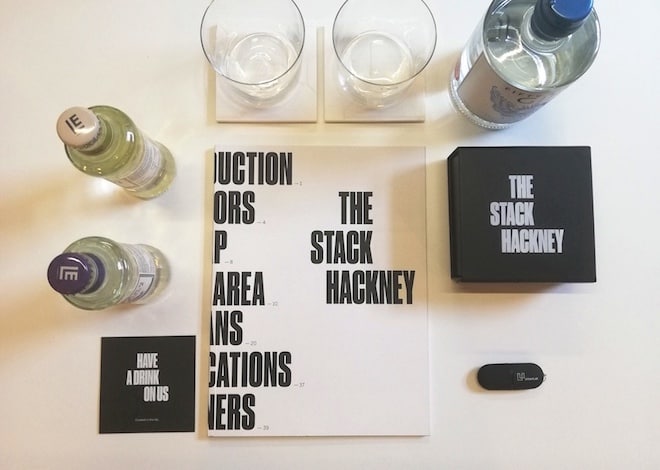
Welcome packs sourced from local businesses.

We invited residents to give us permission to collect and use data captured from discrete recessed ceiling mounted *sensors – installed during the build phase by sense_ our real estate intelligence platform.

And with the generous consent of over a dozen residents – living in one, two and three-bedroom apartment types – we collected 12 months of data that contrasts life during the first lockdown period with the easing of lockdown measures.

We don’t know of any other developer using sensors to inform private apartment design in this way. And, coupled with the fact the sensors have been running throughout a global pandemic, it has made for a unique social experiment.

The Findings


Visual showing weekly data patterns across 1, 2 and 3 bedroom apartments.

Occupancy across the building shows big changes in each ‘phase’ of the pandemic.
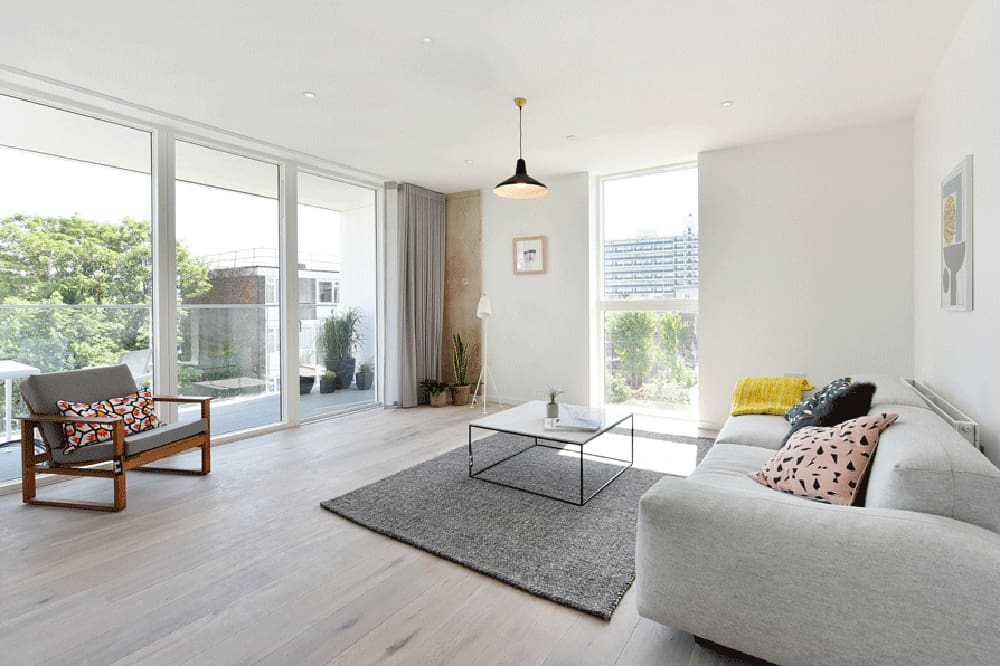
living at The Stack, Hackney.

Weekday occupancy levels in all flat types increased between pre-pandemic months and the first lockdown, with the effect being most pronounced in the 1 bedroom flats.

Overall occupancy levels decreased in the ‘loose’ lockdown (apart from in 2 bedroom flats…), this suggests that people were enjoying the reduced restrictions, opening up of hospitality etc., and going out of their homes a lot more. This was also over the summer months, where the warmer weather and longer days were likely additional influencing factors.
The Stack, Hackney.

Occupancy levels rose again in the second strong lockdown, though not as high as in the first strong lockdown (NB different for 2-bed flats.) potentially reflecting the slightly less restrictive rules of this lockdown period in comparison to the first. (NB different for 2-bed flats.)

Pre pandemic, in 1 and 2 bedroom flats, weekend occupancy was higher than weekday occupancy, suggesting residents spend most of the week out of their homes, likely at work. During the lockdown periods, weekday occupancy was higher than weekend occupancy in these flats, suggesting that many were working from home. (Pre pandemic, 3 bedroom flats had slightly higher weekday occupancy than weekend occupancy).

In all time periods of the study, the second bedroom in 2 and 3 bedroom flats showed very low signs of overnight occupancy. This was also the case for the third bedroom in the 3 bedroom flats. This suggests that these rooms were rarely used as a ‘bedroom’, and the residents of these flats were mainly just using the primary bedroom to sleep in.
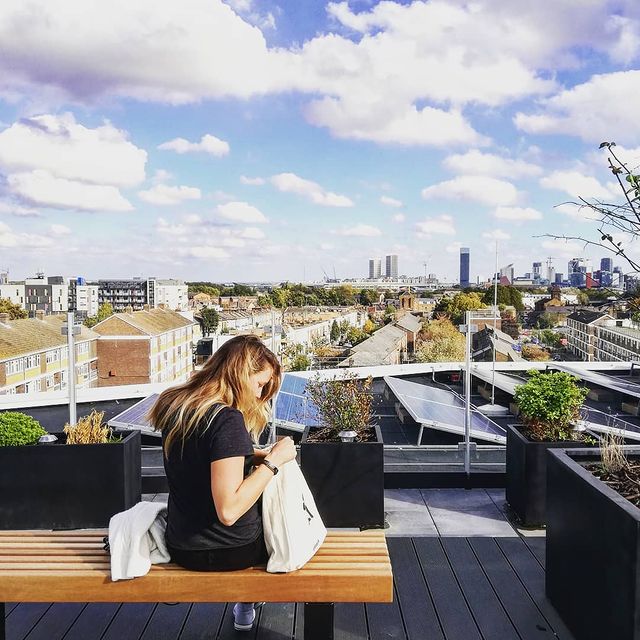
the roof terrace at The Stack, Hackney.

Usage of the third bedroom in the 3 bedroom flats varied between flats, with some being used throughout the day during lockdowns, and some not.

Perhaps the big takeaway is the fact that the ‘extra bedroom’ space was used for other purposes than a bedroom e.g. workspace, dressing room or spare bedroom. This raises the question of how these spaces can be designed to be more adaptable and flexible for use – and not follow a cookie-cutter bedroom layout.

And, unforeseen before the pandemic, the vital importance of having outside living space. All of urbanlabs_ current live developments have outside space – see The Rise and Stratford Park – proof of how we’re taking these learnings to help inform future decisions on how we can create apartments that make the most of buyers’ living space.

A big thank you again to all residents who participated.

*respectful of residents personal privacy, the types of sensors installed detected motion only – and all data has been anonymised. 

Privacy Policy

At The Lab, we are committed to respecting your privacy and protecting your personal data. Our privacy policy outlines how we collect personal data through our website and how we use this data. When we refer to ‘we’, ‘our’ or ‘us’ in this policy we are referring to The Lab Ltd. Please take a few minutes to read the below information carefully before using our website.

The Lab Ltd processes personal data both as a Processor and a Controller.

Information we collect

Personally identifiable data:
Information that you give us voluntarily through an online form to subscribe to services on our site (e.g. to subscribe to our mailing list). This information may include your name, your email address and the company that you work for.

Site usage and device information:
We may automatically record certain information from the device you use to access our site by using various types of technology, including cookies (see our cookies policy below). This automatically collected information may include IP address or other device information such as type of device, web browser, the URL visited just before visiting our site, the pages or other content that you view or interact with on our site, and the dates, times and duration of the visit. We also may use these technologies to collect information regarding how you interact with email messages, such as whether you open, click on, or forward an email.

How we use this information

Personally identifiable data:

  • To fulfil requests, for example, to respond to your online inquiries. If you contact us via email through our site we may keep a record of your contact information and correspondence so that we can respond to you accordingly.
  • To fulfil a service, for example architectural, design and consulting services that you have requested.
  • To inform you about any updates, news or events that we think might be of interest to you via email. We only send these with your consent and you have the right to opt-out of receiving marketing emails from us at any time.
  • For internal business purposes, such as data analysis, so that we can improve our website and deliver you a better browsing experience.

Site usage and device information:

  • To improve and personalise your repeat visits to our website and deliver you the best browsing experience possible, using data collected through cookies. This includes remembering your information from your previous visits to our site so you do not have to re-enter.
  • To understand how users use our site so we can make changes to improve user experience and functionality of our website.
  • We use Google Analytics to measure and evaluate access to and traffic on our site and create user analysis reports to improve and optimise our site. Google operates independently from us and has its own privacy policy, which we strongly suggest you review.

You have the right to:

  • Request access to the personal information we hold about you.
  • Request the correction of inaccurate personal information we hold about you.
  • Request that we delete personal information that we hold about you.
  • Complain to your data protection officer – if you are based within the UK this is the ICO.
  • To exercise your above rights, or if you have any queries, then please email us on dataprotection@thelab.co.uk and we will be happy to help.

Changes to This Privacy Policy
We may update our Privacy Policy from time to time. All updates will be listed on this page. As such we advise you to review this page every now and then. Any changes to the policy are effective immediately after they are posted on this page.

Last update: 19/04/2018

Cookies Policy
Cookies are text files placed on your computer to collect standard internet log information and visitor behaviour information. This information is used to track visitor use of our site and to compile statistical reports on-site activity.

For further information visit www.aboutcookies.org or www.allaboutcookies.org.

You can set your browser not to accept cookies and the above websites tell you how to remove cookies from your browser. However, in a few cases, some of our website features may not function as a result.

How we use cookies

Performance and functionality:
We use cookies to help us understand how you use our site, how you access our site, and from what device you access our site. This helps us improve user experience and functionality of our site.

We use cookies to analyse our website traffic to enhance your user experience.

collate_
from the lab_

Sign up to receive our weekly curation of inspiring and thought-provoking content.