labthinks_ ideas for a better world.

Waste less space to help the planet
Simply put, buildings – and the process of building them – are bad for the planet. They generate 45% of all CO2 emissions. Account for 60% of all materials used in the process; that’s a staggering 400 million tonnes per annum, of which 60 million of which go straight to landfill. But there’s a seemingly constant need for more buildings, and construction is taking place all around us. While there is arguably always going to be a need for construction, we need to find a way for the industry to reduce its impact – and fast – if we’re to beat the race against climate change.

So, how do we meet the increasing building needs of the present, without making future generations pay the price?
There are environmental policies in place. But arguably these are not enough to achieve the target set out by the UK government; to reduce greenhouse gas emissions to net zero by 2050. We need to do more. So, what about the buildings we already have? If we used our existing building stock better, could we reduce the ever increasing need for construction?
Take offices for example. Even pre-lockdown, on average workspaces were only two thirds occupied at any one time. Yet typically workplaces were still designed for full capacity. If you imagine how many offices there are in London alone, just think how much wasted space that equates to. And post-lockdown, occupancy levels are predicted to drop even lower. Research by design studio spacelab_ indicates that 72% of people would like to work from home at least 2 days per week moving forward.
Some business leaders are even questioning the need for a HQ all together. Sir Martin Sorrell of S4 Capital made a powerful statement in an interview with the Financial Times, “I spend £35 million a year on property. I’d much rather invest this in people rather than expensive offices.” And whilst we firmly believe there will always be a need for the office as a place for face-to-face collaboration and socialising; an essential part of any organisation’s culture. The main purpose of the office will shift to just this, a place for collaboration, and away from rows of desks. As a result, as occupancy levels start to reduce, undoubtedly workplaces will shrink in size too.
And it’s not just offices that are wasting space. In July 2019, a record high of 10.3% of shops in the UK sat unused. That equates to a huge sq ft of existing space simply sitting empty. We’re constantly building more buildings to meet the demand, yet we’re not using our existing building stock to its full potential.
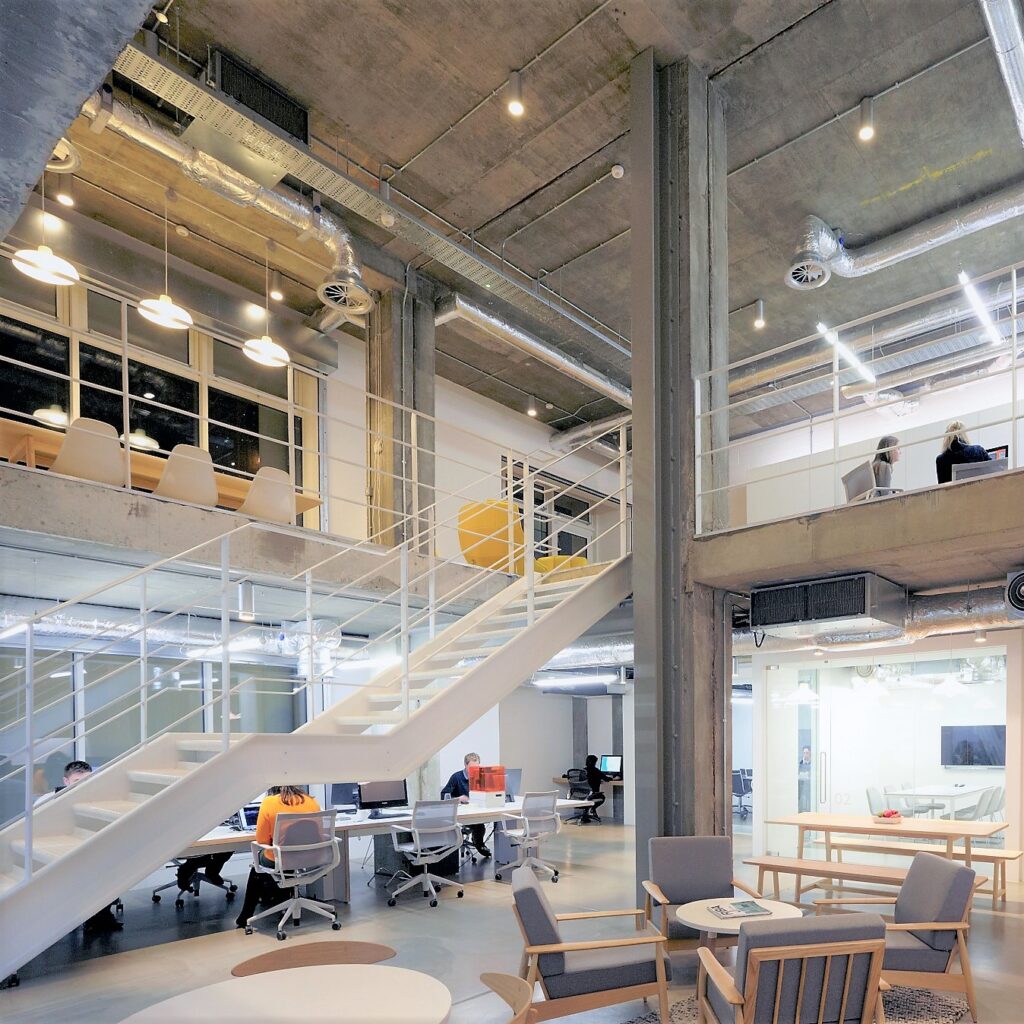
What if we take these existing buildings and re-evaluate how they are used; ensuring they are used to their full potential?
This would certainly be a solution. A number of developers and occupiers are now considering how to repurpose redundant spaces. Whether that be repurposing industrial units for office space, the repurposing of shopping centres for true mixed-use developments or making small changes within the office to ensure every last space is well utilised.
But to achieve the solution, we need data; data, data and more data. To truly re-evaluate the use of a building or space, we must have a deep understanding of how that space; how it is used, who by, what for, how long. So, to give us a better understanding, we need to accurately measure how space is used; only by doing this can we take a truly informed approach to how we use and adapt buildings to reach their full potential. This is part of the reason we founded sense_, to deliver insights in our own spaces, for how space can be optimised, whilst also reducing its energy consumption and measuring your carbon footprint. For a business – and for the future of this planet – measuring space has never mattered more.
So, it is time to waste less space. Are you ready to Remake the World?
To help drive best practice and positive change, we have developed the ‘remaking the world’ challenge. The challenge explores the redundant can be repurposed; identifying the weird and wonderful and also practical examples of how businesses and the community are better utilising space.
The lab_ has joined the challenge. Our office, like many others, was always two thirds full; so we have repurposed the space into a creative co-working space for the wider community. Welcome the depot_. The question is now; how will you remake the world into a better place?

