labthinks_ ideas for a better world.
Remaking Design with Ben Channon
Every day we come across things that no longer serve a purpose in our life; they no longer fit the way we work, the way we want to learn about new things, or the way we want to socialise. Some of these remain as they are, because they seem too difficult to reimagine. Some, well, they just get thrown aside. But, others, they get remade.
Today, we explore remaking design for happiness.
Two years ago, we all sat at home thinking that we would only be working from home for the next couple of weeks. The weeks turned months and the months turned years. Over that time I am sure we all reflected on whether we designed our homes in the right way that suited the way we live today. They might be practical, but do they actually make us happy?
Likewise on the “great return to work”. We all made the commute, if only one or twice a week, and we looked at our offices in more detail. Yes, they have a desk, a printer, (hopefully) some windows for natural light, but all in all, what are they doing for our happiness? Probably, not a lot.
So, we welcome Ben Channon, architect, author, TEDx speaker and all round mental wellbeing, happiness and joyfulness advocate.
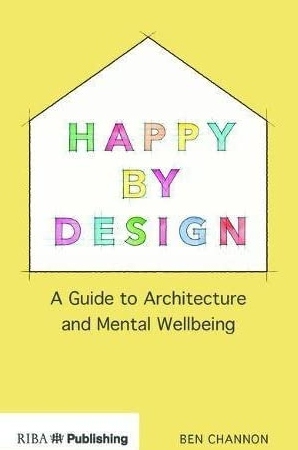
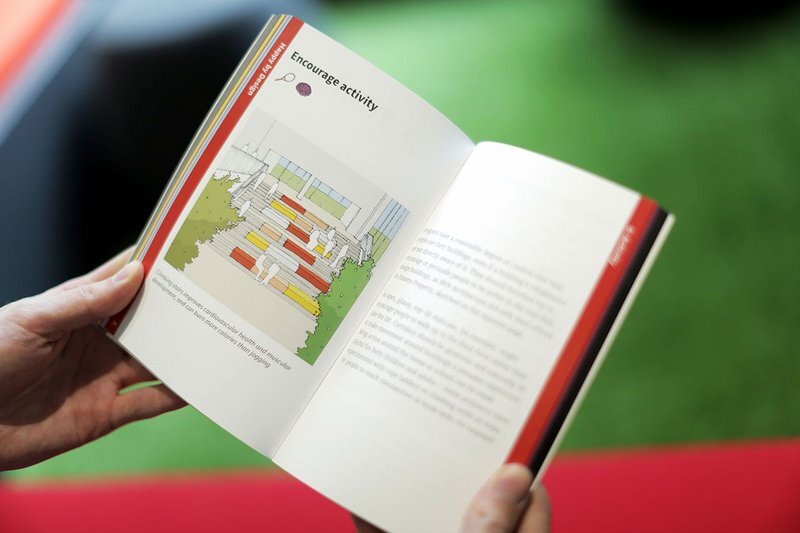
Ben is the author of two books; ‘Happy by Design’ and ‘The Happy Design Toolkit’, which explore the relationship between happiness and buildings, offering research, practical advice and recommendations on how to create buildings; residential or commercial, for the betterment of our mental health.

You have taken on the challenge to remake design to support better mental wellbeing. What inspired you?
It was actually my own personal experience with anxiety and burnout while living in a shared house that made me want to improve how we do things. I had a bit of a lightbulb moment where I realised the spaces around me were having a real impact on how I felt, so thought I’d research if this was the case for everyone. Turns out, we are all affected by the world around us (just ask an environmental psychologist!).
These changes don’t always have to cost money, especially if they are considered early in the process. Something as simple as the orientation or location of a building on-site can significantly impact the health of people using it.

Why do you think the industry needs a book like this?
While there are lots of people in the industry doing amazing things, there are still a lot of new developments out there that simply aren’t supporting occupant mental health in a positive way. This might be because of a lack of outdoor space, few chances for social interaction, not enough storage space. Or, simply poor quality construction leading to stress for residents.
I hope that by highlighting how the built environment can affect individuals’ wellbeing and by giving people helpful design ideas. That way, we can improve the industry for the better so that everyone is meeting the high standards set by the best architects and developers.
Cost is always a challenge in projects, why should occupiers, developers or homeowners be spending money on these things?
Firstly, these changes don’t always have to cost money, especially if they are considered early in the process. Something as simple as the orientation or location of a building on-site can significantly impact the health of people using it.
However, it’s also easy to make a good case for those elements that might cost more, such as taller floor-to-ceiling heights or the use of natural finishes. Firstly, it’s the right thing to do: we have a moral obligation to look after the people who use our buildings. Secondly, research shows that we get a return on this investment: healthier buildings command better values, give developments a USP, and are likely to hold their value better over time. So, in reality, we should be asking, ‘can we afford not to spend money on these things?’
What are some key learnings from your journey so far?
I think one of my favourite ways to think about designing healthy buildings is to consider what we have evolved to need. Be it daylight, exercise, sleep, control and safety, social interaction. Or things from nature such as fresh air and water, plants, and animals. So when we think about the modern office environment, how many of those are we always addressing through design?
While things are thankfully getting better today, there was a real pattern at one point of creating almost the opposite. Hermetically sealed boxes with deep floor plans, set to one temperature and laid out as one large open room which minimised social interaction. We can definitely learn a lot from evolutionary psychologists, and I love bringing their research into my work at Ekkist.
If you could change one other thing, outside of what you are already doing, what would it be?
I’m a real believer we need to be switching to a 4.5- or even a 4-day week! It’s bizarre to me that it’s a system that was created in Victorian times, and yet with all of our modern advances in understanding productivity and work/life balance, we’re still sticking to it! Almost all the studies are now showing that people are just as (if not more) efficient, and it would make everyone’s lives that bit more enjoyable.
Stay up to date with all our latest ideas, projects and events, by joining our weekly newsletter collate_ and if you would like to join our October lab_ session, email hello@thelab.co.uk for further details.

