labthinks_ ideas for a better world.
Remaking Education with Stacie Woosley

Every day we come across things that no longer serve a purpose in our life; they no longer fit the way we work, the way we want to learn about new things, or the way we want to socialise. Some of these things remain as they are, because they seem too difficult to reimagine. Some, well, they just get thrown aside. But, others, they get remade.

Today, we explore remaking education.
Further education in the UK is a luxury with the cost acting a barrier to entry for many. According to the Royal College of Arts, an Art & Design Masters course currently costs £40,000 to study and live in London. Just for one year. Yet, according to ONS, in 2021, the average UK salary for a full-time role was circa £38,000 and circa £13,500 for a part-time role. Something isn’t quite adding up here.
Queue: Stacie Woosley, founder of Make Your Own Masters.
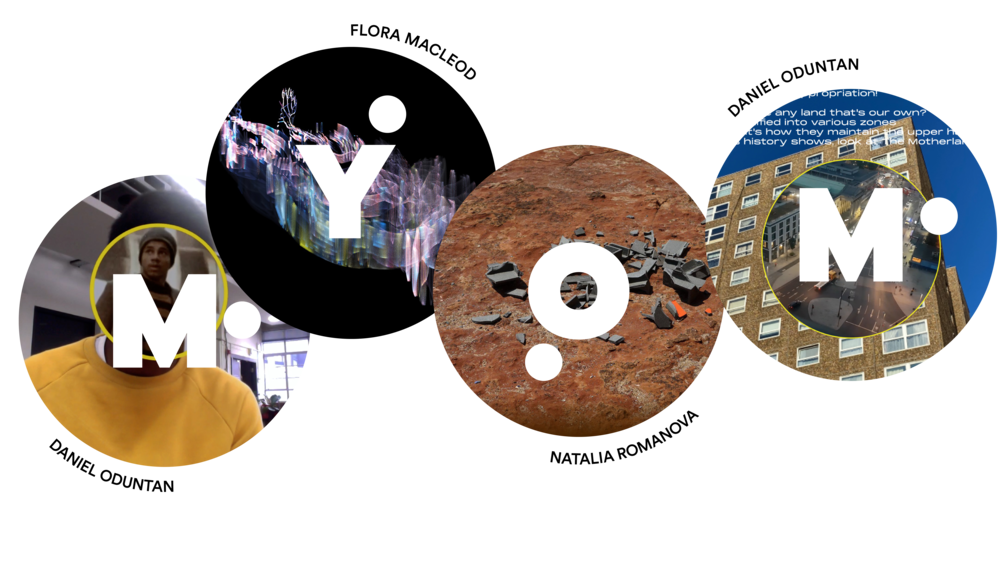
Make Your Own Masters (MYOM) challenges the everyday assumption that we have to go down a traditional university education route to achieve a creative education. Founded by Stacie Woosley in 2017, MYOM asks, why buy an education, when you could make your own?
You have taken on the challenge to remake the process of gaining a creative education. What inspired you?
MYOM all started through a personal lack of access to institutional education due to costs. The financial barrier meant I had to design a way around the problem.
After running the learning experiment on myself, I realised just how big the problem was. From this point I refined and developed the course to take on a cohort of learners to keep pushing the concept and raise awareness around the lack of access and diversity within creative education and the professional industry.
Could you tell us a little about the process?
MYOM began with an idea and a cold email. Once I had decided to try and source a year of learning for free, I drafted an email explaining my problem and the solution I was trying to build. I sent this email to leading artists and designers asking to learn from them for the duration of the project. I sourced four briefs, ten close mentors, a network of 100 peers and four different spaces to learn in.
When I took on the new cohort of ten learners I tried to keep the programme as agile as my original method. Each learner became a ‘learner in residence’. We had 1:1 sessions on a bi-weekly basis, ran peer learning groups, external speakers, crit away days, and delivered monthly learning sessions to pass on all the knowledge I gained during my MYOM year. This knowledge proved to be vital when building your own programme and learning in an alternative way.
What’s next for Make Your Own Masters?
I am looking for companies across the creative industries to sponsor the next cohort, whether that be financial support, briefings or mentorship for the cohort. For anyone that is interested in finding out more, do email me.
My aim is to grow MYOM into an on-going national programme that challenges traditional approaches to education; supporting individuals to grow in their creative careers. Taking on new cohorts and growing MYOM will continue to provide proof of the success of the programme and allow us to access larger and potentially global brands.

What are some key learnings from your journey so far?
The big key learning from MYOM is that learning is something we should always be doing.
I believe that the best thing you can then do with that knowledge is to pass it on and watch other people grow with it. Myself and the learners now have a bit of a mantra, to ‘Make Your Own’ and this outlook is an incredibly powerful one to have and will always fuel our life long learning ambitions.
If you could change one other thing, outside of changing creative education, what would it be?
I would love to approach city planning from a more inclusive point of view, to understand why so many towns and cities create environments that lack real opportunities for young people. How can councils, businesses and creatives help transform a location and positively impact the lives of the people that live there.

